Headlines
• More than 55 million Americans are under dangerous heat alerts as a powerful heat dome intensifies
• Spain, Portugal, and Greece are battling wildfires amid an ongoing summer heat wave
• Maricopa County (Arizona) reports more than 400 suspected heat-related deaths following record-breaking temperatures
Extreme Temperatures (Past Week)
• Hottest: Phoenix, AZ — 118 °F on August 13 (with heat indices well above that)
• Coldest: Barrow, AK — 48 °F earlier this week
Weekend Weather Planner (Friday–Sunday)
Northeast
-
Friday: High 98 °F (feels like ~103 °F) / Low 76 °F — Extremely hot and breezy
-
Saturday: High 103 °F / Low 78 °F — Extreme heat warning in effect
-
Sunday: High 99 °F / Low 73 °F — Hot; chance of storms in the afternoon
Best time: Early mornings are the safest for any outdoor activity
Southeast
-
Friday: High ~95 °F / Low ~75 °F — Hot and humid with frequent afternoon storms
-
Saturday: High ~97 °F / Low ~76 °F — Very muggy; watch for heavy downpours midday
-
Sunday: High ~94 °F / Low ~74 °F — Slightly cooler; afternoon storms remain possible
Best time: Mornings are ideal before storms and humidity build
Midwest
-
Friday: High ~94 °F / Low ~73 °F — Hot, but manageable with shade and hydration
-
Saturday: High ~92 °F / Low ~72 °F — Warm and humid; isolated storms possible
-
Sunday: High ~90 °F / Low ~70 °F — Warm and sticky; better day but still humid
Best time: Early to mid-morning for outdoor plans
Southwest
-
All Weekend: Highs 110–115 °F (feels like 115–120 °F) / Lows 80–85 °F — Dangerous levels of heat
Best time: Outdoor activity should be before sunrise or after sunset only
Rockies
-
Friday: High ~85 °F / Low ~60 °F — Cooler; potential for late afternoon storms
-
Saturday: High ~88 °F / Low ~62 °F — Nice morning; storms possible early PM
-
Sunday: High ~86 °F / Low ~61 °F — Still warm, with afternoon instability
Best time: Mornings offer the most comfortable and storm-free conditions
Pacific Coast
-
Friday–Sunday: Highs 70–75 °F / Lows 55–60 °F — Cool and pleasant, with morning fog clearing by mid-day
Best time: All day — great beach and outdoor weather
Alaska
-
Friday–Sunday: Highs 60–65 °F / Lows 50–55 °F — Cloudy and cool with occasional coastal drizzles
Best time: Afternoon brings the warmest and driest weather
Hawaii
-
Friday–Sunday: Highs around 85 °F (feels like ~88 °F) / Lows around 72 °F — Trade-wind breezes and brief mid-day showers
Best time: Mornings are perfect for beach or hiking plans
Radar & Model Interpretation
A powerful heat dome dominates the central U.S., driving dangerous, record-level heat all weekend. In the Northeast and Midwest, temperatures trending near or above 100 °F with isolated storm chances by Sunday. The Southeast remains in a daily storm cycle due to moisture and heat. Heat in the Southwest is nearly relentless. The Rockies may see isolated PM convection. Coastal regions (Pacific, Alaska, Hawaii) remain stable with mild temperatures and minimal disturbance.
Emergency Preparedness Tip
• Avoid outdoor activity during peak heat (11 AM–5 PM)
• Drink water consistently—even before you feel thirsty
• Check in on neighbors and pets, especially in vulnerable situations
• Keep windows shaded and have a plan for cooling off if needed
Andrew’s Note
This weekend stands out as one of the hottest yet. The central U.S. is under a critical heat dome; hydration and smart planning are your best defenses. Wherever you are—stay cool, stay safe, and I’m here to help you stay ahead of the weather.
Need Custom Weather Alerts?
Want personalized updates—like text alerts, real-time radar notes, or phone alerts before dangerous heat or storms? Hit me up through Ko-fi to get set up.
Support Big Al’s Bulletin
If you find this newsletter valuable, you can support the work by buying me a coffee:
https://ko-fi.com/big_al_315
Every contribution helps keep these updates flowing and free for all.
BULLETIN
Hurricane Erin Intermediate Advisory #17A
NWS National Hurricane Center Miami FL | AL052025
200 PM AST Fri Aug 15 2025
...ERIN MOVING QUICKLY WEST-NORTHWEST...
...LIKELY TO PASS NEAR OR NORTH OF THE LEEWARD ISLANDS SATURDAY...
SUMMARY (200 PM AST)
Location: 18.6N 56.8W
About 415 mi (665 km) E of the N Leeward Islands
Max Sustained Winds: 75 mph (120 km/h)
Movement: WNW at 17 mph (28 km/h)
Min Pressure: 993 mb (29.33 in)
WATCHES/WARNINGS
Tropical Storm Watch:
-
Anguilla & Barbuda
-
St. Martin & St. Barthelemy
-
Saba & St. Eustatius
-
Sint Maarten
Tropical storm conditions possible within 48 hrs. Other areas, including Virgin Islands & Puerto Rico, should monitor Erin.
DISCUSSION
Erin’s center moving WNW near 17 mph. Track likely near or just north of northern Leewards this weekend. Hurricane Hunter data shows 75 mph winds; steady to rapid strengthening expected next 2–3 days, with Erin likely becoming a major hurricane this weekend. Hurricane-force winds extend 25 mi from center; tropical-storm-force winds 115 mi, mainly north.
HAZARDS
-
Rainfall: Outer bands could bring 2–4 in., isolated 6 in., to N Leewards, Virgin Islands, & Puerto Rico tonight–Sun. Risk of flash flooding, mudslides.
-
Wind: Tropical storm conditions possible in watch area by early Sat.
-
Surf: Swells to impact N Leewards, Virgin Islands, & Puerto Rico this weekend; western Atlantic next week. Life-threatening surf/rip currents possible.
More info: hurricanes.gov

Hey everyone,
I wanted to take a moment to break down the major storm outbreak that rocked Central New York in the early hours of Sunday, June 22, 2025. If you were in the path of the storms—or following the news afterward—you know just how devastating and fast-moving these storms were. Here's a full recap of what happened, how it formed, and the damage it left behind.
⛈️ What Set It All in Motion?
This was no ordinary summer thunderstorm. The setup started days earlier out west with a derecho (a long-lasting line of severe thunderstorms with strong winds) that formed over the Northern Plains. That same system moved eastward and tapped into hot, humid air sitting over New York. Combine that with a sharp cold front and strong upper-level winds, and you had the perfect recipe for overnight chaos.
By the time the storms rolled into our area just after 3:30 a.m., everything was in place for severe thunderstorms—and, unfortunately, tornadoes.
🌪️ Two Tornadoes Confirmed
The first tornado struck Clark Mills in Oneida County around 3:58 a.m. It was an EF-1 with winds up to 105 mph. It traveled about 2.4 miles and caused heartbreaking damage. Most tragically, it claimed the lives of six-year-old twins Emily and Kenni Bisson, and their neighbor Shelly Johnson, after trees fell onto their homes.
The second tornado was confirmed later that day by the National Weather Service in western Herkimer County. It was also an EF-1, with estimated winds around 90 mph. This one didn’t cause any deaths, but it did snap trees and damage property before lifting.
🌊 It Wasn’t Just Tornadoes: Flash Flooding and Wind Damage Too
Alongside the tornadoes came powerful straight-line winds—over 70 mph in some places—and 3 to 5 inches of rain that fell fast and furiously. Roads flooded out in towns like Norwich, Sherburne, Canastota, and New Berlin. Some neighborhoods were completely cut off, and many homes experienced basement flooding.
The National Weather Service even issued Flash Flood Emergencies, something you don’t see every day around here.
⚠️ The Aftermath
By sunrise, the devastation was widespread. Over 50,000 people were without power, roads were closed due to fallen trees and debris, and some residents were trapped in their homes. Local first responders, highway crews, and volunteers jumped into action to help with search, rescue, cleanup, and power restoration.
Governor Hochul declared a state of emergency in 32 counties, bringing in state help for the cleanup and support operations. Meanwhile, crews worked around the clock to clear roads and bring back the power.
🕯️ Why Overnight Storms Are So Dangerous
These storms hit while most people were sleeping, which made them even more dangerous. Nighttime tornadoes are harder to detect and respond to—especially when they spin up quickly like these did. There’s not always enough warning to act.
That’s why it’s so important to have weather alerts on your phone, a NOAA weather radio by your bed, and a family emergency plan you can put into action fast.
💪 Central New York Always Rallies
Despite the destruction and heartbreak, what stood out most was the resilience and unity of the community. People helped neighbors clear debris. Volunteers delivered supplies to those without power. And folks all over Central New York checked in on each other.
We’re no strangers to strong storms—but this one was a serious wake-up call.
🔗 Stay Connected
If you want more weather updates, storm breakdowns, or just want to stay informed in a no-nonsense way, follow me here and on social media. I’ll keep doing my best to help you stay ahead of the weather—before it turns dangerous.
Thanks for reading—and most importantly, stay safe out there.
—Big Al

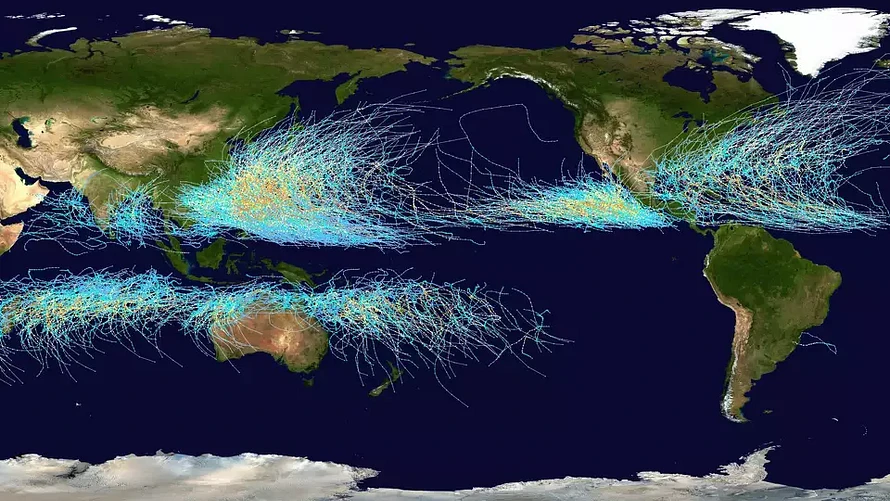
When we think of hurricanes, we usually picture them sweeping across the Caribbean, pounding the Gulf Coast, or churning toward the southeastern United States. But there's one part of the Western Hemisphere that almost always escapes the chaos: South America. For many, it’s a mystery—why don't hurricanes slam into countries like Brazil, Venezuela, or Colombia the way they do elsewhere?
Let’s break it down.
1. Hurricanes Need a Launchpad—and South America Doesn’t Have One
Most Atlantic hurricanes form off the west coast of Africa. As warm, moist air rises from the ocean, it creates thunderstorms that can grow into tropical depressions, storms, and eventually hurricanes. These systems are then carried westward by the trade winds.
But here’s the catch: to become hurricanes, these storms need to form far enough north of the equator—at least 5 degrees latitude—where the Coriolis effect can help them start spinning.
South America’s northeastern coast is too close to the equator. Without enough Coriolis force, tropical systems can’t develop the rotation they need to become hurricanes.
2. The South American Coastline Isn’t Hurricane-Friendly
Even if a hurricane forms far enough north, its path has to steer it toward land. But the way South America's coastline curves actually protects it. The northern coast of Brazil, for example, angles southeast, which means most storms are deflected northward, often toward the Caribbean islands or the Gulf of Mexico.
In other words, the Atlantic hurricane highway doesn't lead directly to South America.
3. The Waters Off South America Are Too Cool
Hurricanes feed on warm ocean water, usually around 80°F (27°C) or higher. But the Atlantic waters near South America's northern and eastern shores are cooled by the South Atlantic Anticyclone and ocean currents like the Brazil Current.
This cooler water takes away the fuel that hurricanes need to grow. No warm water, no powerful storm.
4. It’s Not Impossible—Just Rare
While South America isn’t known for hurricanes, it’s not immune. The most notable exception was Hurricane Catarina, which made landfall in southern Brazil in 2004—an extremely rare, freak storm. And occasionally, tropical storms or weak cyclones brush the northern coast, especially near Guyana or French Guiana, though they’re usually very weak or quickly dissipate.
In Summary
South America is spared from hurricanes thanks to:
-
Its proximity to the equator (not enough spin)
-
Unfavorable coastline geometry
-
Cooler ocean waters
-
Typical storm tracks that veer elsewhere
So while residents of South America face their share of extreme weather—from Amazonian floods to Andes snowstorms—they can usually rest easy when it comes to hurricanes.
Further Reading & Sources
-
National Hurricane Center (NHC) – https://www.nhc.noaa.gov
Official forecasts, hurricane tracking maps, and data from NOAA. -
NOAA Historical Hurricane Tracks Tool – https://coast.noaa.gov/hurricanes
Explore past hurricane paths and storm impacts on an interactive map. -
JetStream - National Weather Service Online School for Weather – https://www.weather.gov/jetstream/
Learn about the Coriolis effect, tropical systems, and more in this educational portal. -
NOAA Coral Reef Watch: Sea Surface Temperatures – https://coralreefwatch.noaa.gov/satellite/index.php
Check real-time ocean temperatures, a key ingredient in hurricane development. -
NASA Earth Observatory: Hurricane Science – https://earthobservatory.nasa.gov/features/Hurricanes
In-depth articles on how hurricanes form, behave, and are studied. -
World Meteorological Organization (WMO) – https://public.wmo.int
Global perspective on weather, climate, and extreme weather events.
Spoiler: Not really. Here's why.

Hey everyone! If you’ve ever looked at a hurricane map and wondered why all the big storms stay on their own side of the equator… you're not alone.
Turns out, hurricanes can’t cross the equator — and the reason why is actually kinda cool.
It’s All About the Spin
Storms need something called the Coriolis effect to get their spin. It’s caused by Earth’s rotation and helps storms twist into that familiar hurricane shape. But right at the equator? There’s no spin — zero. So hurricanes can’t really form there, and they definitely can’t cross over it.
If one tried, it would just fall apart. It’d be like trying to make a fidget spinner work without spinning it. No twist, no storm.
So, Nope — Not Happening
Could it happen someday? Maybe in a freak, once-in-a-thousand-years way. But practically speaking, hurricanes just don’t cross the equator. Nature keeps them in their lanes.
🌀 I thought this was a fun little weather fact to share. If you want more of this kind of stuff, follow my stream or check out my Substack where I post more in-depth weather breakdowns!
Thanks for reading! Stay curious 🌦️
The last time I posted here was back in October 2024 (holy crap). I always meant to keep things active here but like a lot of other things in life, things happen and I get overwhelmed and distracted. My anxiety, depression, and ADHD surely don't help with that. I am going to try and post more often and reconnect.
Since the last time I posted, there has been a lot going on and I've lost a few friends. I've tried growing things but with that stuff going on and some other things, I got real discouraged...I still am discouraged. I haven't streamed as much, I haven't posted as much and that has also discouraged me even more.
I started a new media page, I have gotten into writing news articles a bit which is kind of fun. Nobody has really found my stuff yet but it's still fun and interesting to write them.
I have to admit...one of the things I have always wanted to be is up front and real...there have been a lot of moments that have felt like i've been shouting into the void...posting and streaming and wondering if anyone is really out there...sometimes I want to give up and sometimes I don't know why I keep going but I just hope that someday, I find my people.
So, here's my plan...I'm going to try posting here more often. I am going to try and share more. If there is anything you'd like to see here, let me know.
Thanks for being here...and, if you're new here...Welcome, I'm glad you're here.
-Andrew
First, Ilet's talk about Tropcial Storm Nadine, then we'll go over Tropical Storm Oscar.
Tropical Storm Nadine has made landfall in Belize, near Belize City with max sustained winds near 60mph. Nadine is forecast to bring anywhere between 4-6 and as much as 8-12 inches of rain in some areas which is expected to bring localized areas of flash flooding. Tropical Storm conditions are expected through the afternoon
Here is a summary of Nadine as of the last update...
SUMMARY OF 1100 AM CDT...1600 UTC...INFORMATION
-----------------------------------------------
LOCATION...17.4N 88.3W
ABOUT 10 MI...15 KM SW OF BELIZE CITY
ABOUT 75 MI...120 KM S OF CHETUMAL MEXICO
MAXIMUM SUSTAINED WINDS...60 MPH...95 KM/H
PRESENT MOVEMENT...W OR 270 DEGREES AT 8 MPH...13 KM/H
MINIMUM CENTRAL PRESSURE...1002 MB...29.59 INCHES
Tropical Storm Oscar has formed in the Caribbean with max sustained winds at 40mph. Oscar is currently heading west at 13mph, straight for the Turks and Caicos Islands. Rainfall estimates from Oscar range from 1-2 inches to 4-6 inches. By the looks of the track, Oscar looks to head west where it will make landfall with Cuba and then turn northeast. Here is a summary on Tropical Storm Oscar as of the last update...
SUMMARY OF 1100 AM EDT...1500 UTC...INFORMATION
-----------------------------------------------
LOCATION...21.3N 70.2W
ABOUT 190 MI...305 KM ESE OF THE SOUTHEASTERN BAHAMAS
ABOUT 495 MI...795 KM E OF CAMAGUEY CUBA
MAXIMUM SUSTAINED WINDS...40 MPH...65 KM/H
PRESENT MOVEMENT...W OR 270 DEGREES AT 13 MPH...20 KM/H
MINIMUM CENTRAL PRESSURE...1007 MB...29.74 INCHES